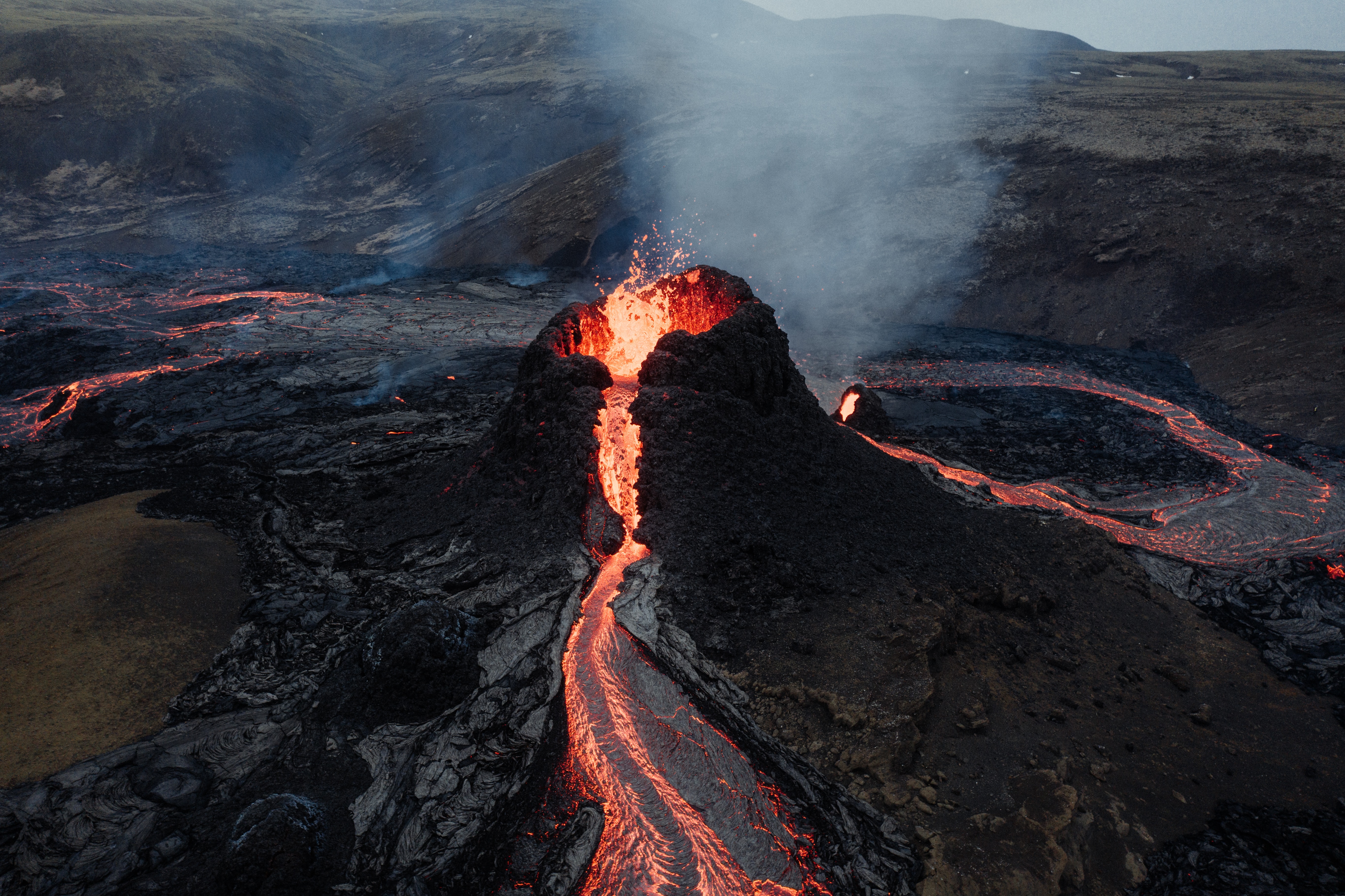
"Until the lions have their own historians, the history of the hunt will always glorify the hunter"
- African Proverb
Left Image

New Materialism & Environmental History

In this project, I highlight and explore the theories which are often called together as 'new materialism'.

Following that, I highlight how this theory can help shape a new kind of environmental history—a way of history which de-centers the humans from the narratives of environmental history.

I argue that new materialism can offer a nuanced and complex understanding of the interaction between humans and non-humans in the past.

27 Nov 2023

Abstract

This website-essay will explore the various theories under the roof called 'new materialism', and then try to understand how these might affect the ways in which we study environmental history. To understand how such histories are possible, this online project will explore the case of two of the major works that have taken steps in such a direction. It ends by highlighting some of the limitations of such narratives, and with a note on the future direction of research.

What are the theories under the broad title of 'New Materialism'?

Have you ever considered how the objects around you affect your life and the world? If so, you might be interested in learning about New Materialism.

Broadly, New Materialism is a theoretical framework that emphasizes the active role of material things and the material world in shaping human experiences and social structures.

It challenges traditional dualisms between the human and non-human, mind and body, and nature and culture.

Now, what does that mean?

To illustrate what New Materialism means in practice, let’s take a look at an example that might help us; the example is ‘Smartphone usage’.

In a traditional dualistic view:

Human vs Non-Human

The user (human) is often considered separate from the smartphone (non-human) they use.

Nature vs Culture

The smartphone is typically categorized as a product of technology, distinct from the natural world.

Now, let's apply New Materialism theories:

Entangled Relationships

In a New Materialist perspective, the user and the smartphone are not separate entities but are entangled in a complex relationship. The smartphone is not just a passive tool; it actively shapes and influences the user's behavior and experiences.

Nature-Culture Continuum

Instead of seeing the smartphone as purely a cultural artifact, New Materialism invites us to consider the natural resources, energy, and environmental impact involved in producing and maintaining the device. This blurs the boundaries between nature and culture, highlighting the ecological footprint of technological objects.

Four Major Theories in New Materialism

Affect and Assemblages

by
Deleuze and Guattari

Materialist Onto-epistemology

by
Karen Barad

Posthuman and Post-humanities

by
Rosi Braidotti

Actor-Network Theory

by
Bruno Latour

Affect and Assemblages

"DeleuzoGuattarian materialism regards human bodies and all other material, social and abstract entities as relational, having no ontological status or integrity until drawn into ‘assemblages’ with other similarly contingent and ephemeral bodies, things and ideas through their capacities to affect or be affected" (Fox & Alldred, 2019).

Whoa! Whoa! Whoa! What does that mean?

Okay here is an attempt for a simpler understanding of the above: ​

Deleuzo-Guattarian materialism is a way of looking at the world that says nothing is fixed or stable. Everything is always changing and becoming something else through interactions with other things. ​

Still, doesn't quite make sense, right?

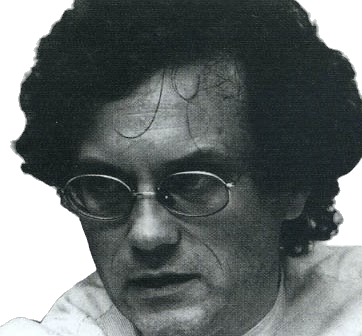
Felix Guattari
Félix Guattari, Wikimedia
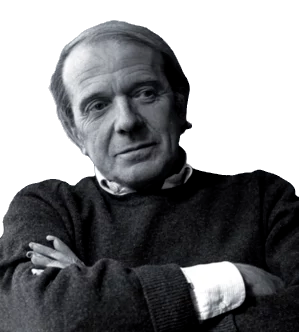
Gilles Deleuze
Gilles Deleuze, Wikimedia

Affect and Assemblages - Continued

For example, human bodies are not just made of flesh and bones, but also of culture, politics, and emotions that are influenced by other bodies, things, and ideas.

Deleuzo-Guattarian materialism also focuses on how things affect or are affected by others. Affect is what makes things connect or differ, and what gives them meaning and value.

Deleuzo-Guattarian materialism calls any group of things that are connected by affect an 'assemblage'. An assemblage can be anything from a family, a community, a nation, a language, a machine, a concept, or a piece of art.

Assemblages are not permanent or fixed, but can change, transform, or disappear depending on how they interact with other assemblages.

Deleuzo-Guattarian materialism is a way of exploring the complexity and diversity of the world, and of challenging the dominant or oppressive ways of organizing and understanding it.

Relevant sections: 10:42 to 11:53. Video Source Link: Youtube

Transcript

Deleuze and Guattari's ontology reanalyzes the processes of social production based on a conceptual framework of Spinoza's monist philosophy. The focus is on everyday interactions rather than social structures and top-down power. Read more

Materialist Onto-epistemology

Wow, so many big words. But let's unpack it slowly together:

  • One of the most influential new materialist thinkers is Karen Barad. She is a feminist scholar who draws on quantum physics to challenge the conventional ways of understanding reality, knowledge, and science.
  • What if reality and knowledge are not separate, but intertwined? This is the idea behind materialist onto-epistemology, a new framework proposed by Karen Barad. It combines ontology (the study of being) and epistemology (the study of knowing) into one inseparable concept.
Karen Barad
Karen Barad. EGS

Materialist Onto-epistemology (continued)

  • Barad uses the term ‘intra-action’ to emphasize that things do not exist or act independently, but rather emerge and change through their relations with other things.
  • Therefore, according to Barad, reality is not a given, but a process. These intra-actions create phenomena that are context-specific and dynamic, and that include both the object and the observer of the phenomenon.
  • Barad’s materialist onto-epistemology offers a way to rethink the boundaries and relations between meanings and matter, word and world, nature and culture, and to practice science in a more ethical and responsible way.

Posthuman and
Post-humanities

Another important new materialist thinker is Rosi Braidotti. She challenges the traditional view that places humans at the center of everything
Rosi Braidotti
Rosi Braidotti. rosibraidotti.com

What if humans are not the most important or superior beings in the world? This is the question that Rosi Braidotti asks in her posthuman theory. Rejecting the arrogance of anthropocentrism, Braidotti aligns with the transformative forces of life in its inhuman aspects.

According to Braidotti, everything in the world is alive and smart, not just humans. She sees matter - including all our bodies - as lively, intelligent, and self-organizing. This perspective blurs the boundaries between nature and culture, breaking down dualisms like man/woman, human/animal, and mind/body.

Braidotti’s concept of the posthuman challenges the idea that the humanities are only about studying human culture and history. She proposes a new field of study that she calls the ‘post-humanities’, which explores the relations and transformations between humans and non-humans, such as animals, plants, machines, and environments.

Therefore, Braidotti’s posthuman theory offers a way to rethink our place and role in the world. This perspective embraces an ecology of the human and non-human, treating both as interconnected and equally important.

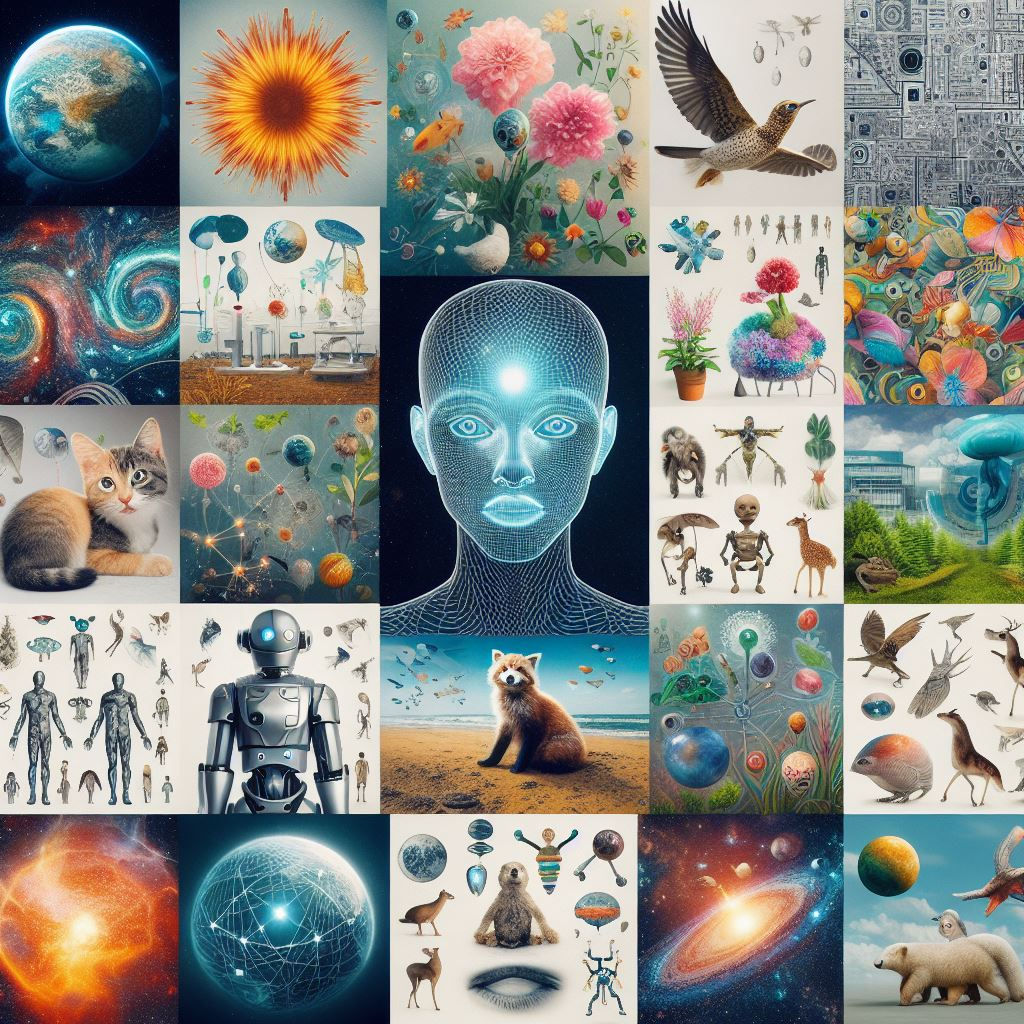
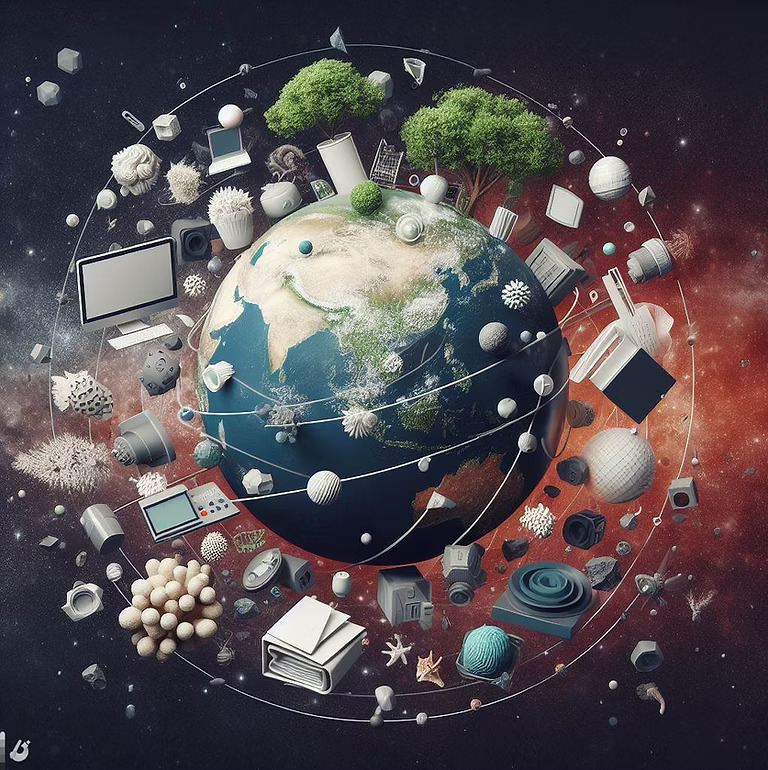
Posthuman collage visualisation
Here is an AI generated image that captures the essence of the posthuman. It attempts to visualize the concept of the posthuman by using Bing Image creator (as of late 2023). It shows a collage of images representing different aspects of human and non-human life, such as animals, plants, machines, and symbols. The image is meant to convey the diversity and complexity of the posthuman world.

In practical terms, the posthumanities shift attention from fixed ideas about 'life' to exploring the practices and flows of becoming. This approach creates a bridge between the physical sciences, social sciences, and humanities, encouraging a holistic understanding of complex assemblages that span both natural and cultural realms.

Braidotti advocates for a new, ethically transformative science that moves beyond the constraints of capitalist imperatives. She envisions a 'minor science' that recognizes the complexity of its subjects, acknowledging their diverse materialities and relational nature.

Actor Network Theory

Another new materialist theory related to Deleuze and Guattari’s assemblages is Actor-Network Theory (ANT). Originating in Science and Technology Studies, ANT shares many intersections with assemblage theory.

What if everything in the world is an actor, and everything is a network?

This is the basic idea behind ANT. Its three main principles are:

  1. Agnosticism: Abandoning assumptions about the nature of networks, the accuracy of actors’ accounts, or causal links.
  2. Generalized Symmetry: Treating all actors—human and non-human—equally within the network.
  3. Free Association: Breaking boundaries between natural and social phenomena.

Bruno Latour suggests that everything is of equal value and part of the same omnipresent network—a flat ontology. Everything connects in some way. This challenges traditional sociology, which often places humans above objects.

For example, without phones, many human connections would cease to exist. Technology now mediates most relationships. Doesn’t that give the phone as much agency and importance as us?

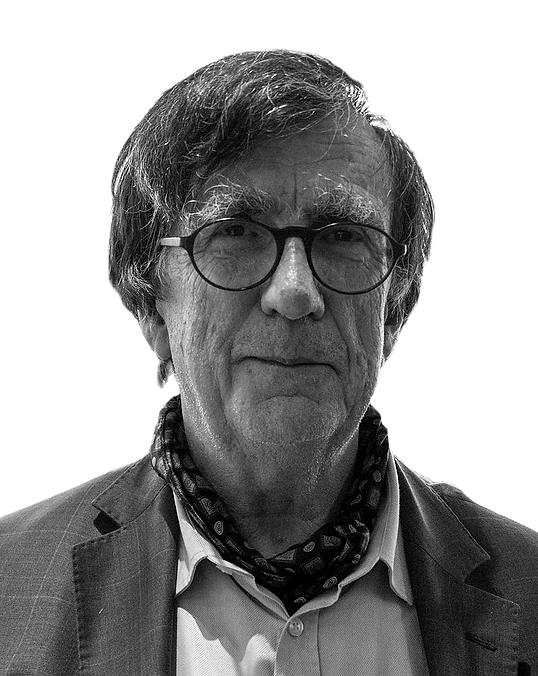
Bruno Latour
Bruno Latour. Wikimedia
Relevant sections: until 3:48. Video Source Link: Youtube

Transcript


Everything connects to each other in some way. This makes traditional sociologists uncomfortable because how can an object be as important as a human being in a network?

Is a mobile phone or a birthday cake as relevant as you or me? Is it possible?

For example, without the phone, some existing human connections would cease to exist. This is more relevant than ever now since everything is online. How many people would you be able to stay in touch with without technology?

Doesn't that give the phone as much agency and importance as us?

Doesn't this prove that we are not superior to any non-human, but instead, all agents are present on the same level of existence? Objects create more connections than we can imagine.

Although they are inanimate, we cannot exist without them, for they were here before us.

The birthday cake brings people together at the party. Someone had to buy it from a bakery, which was made by someone else who retrieved the resources from another person, which was purchased from the manufacturer who received it from the farm and poultry.

Without the cake, do you have any direct connections to a farm?
Read less

Thus, what is amazing about Actor Network Theory is the possibility of exploring the connections between different objects, which could provide a totally different way of looking at the world.

This is a world of connections that does not limit to any dualisms, of technological-social, human-non-human.

So what are some
takeaways from the
above theories?

Common themes

01

Critique of Traditional Dualisms

All the four scholars challenge the traditional dualisms - such as nature/culture, human/non-human, and mind/body.

02

Relational Ontology

All of the above scholars argue that the objects and entities gain meaning and existence through their relationships and interactions with other entities.

Thus, they also highlight the limits of looking at the world from a very human-centric, a.k.a. anthropocentric approaches.

03

Materiality as Active and Vibrant

They all emphasize that the matter is lively, intelligent and self-organizing. Materiality is not passive but plays active role in shaping our realities.

This also means a rejection of essentialism - stating that there is stable essence of objects.

04

Interdisciplinary Approaches

All the scholars advocate for breaking the disciplinary distinctions in understanding of the world by blurring the boundaries between the natural sciences, social sciences and humanities.

Moreover, what is intriguing is that all these theorists come from different fields of interest and come together on this common ground.

  • Deleuze and Guattari come from philosophical interest.
  • Barad attends to these conclusions from quantum mechanics and feminist studies.
  • Braidotti arrives from the interest in post-human and post-humanities to overcome the limitations of traditional humanities.
  • Latour appears from the science and technology studies.

Thus, despite their different starting points, they all come to theories that have a lot in common.

To sum up, new materialism is a diverse and interdisciplinary field of inquiry that challenges the traditional ways of understanding reality, knowledge, and power.

It emphasizes the active and relational role of matter in shaping human and non-human experiences and expressions. It also offers new perspectives and methods for studying the complex and dynamic assemblages that span across natural and cultural realms.

New materialism is not a unified or coherent theory, but rather a collection of approaches that share some common themes and goals.

By exploring the works of four influential new materialist thinkers, we have seen how they critique the dualisms, essentialisms, and anthropocentrism that have dominated the humanities and social sciences.

We have also seen how they draw on different fields of interest, such as philosophy, quantum physics, feminism, post-humanism, and science and technology studies, to develop their own frameworks and concepts.

Exploring New Materialism Theories in Environmental History

How can we understand the past without putting humans at the center of everything? This is the question that new materialism theories pose to environmental historians. These theories offer a promising shift in perspective, challenging us to reconsider human-centric narratives in environmental history.

As we embark on this exploration, let's spotlight specific works that bring these theories to life:

  • What works can we turn to?
  • Which ones unravel narratives, guiding us through a history that consciously de-centers humans?

Ready to dive in? Scroll down to explore the connections between new materialism theories and groundbreaking works in environmental history.

Thinking Like a Mountain (1949)

A very short essay published in Aldo Leopold's book Sand County Almanac: And Sketches Here and There (1949).

It is one of the first narratives with a focus on the environment that has de-centered the human.

No wonder why it features in many introductory environmental history syllabi.

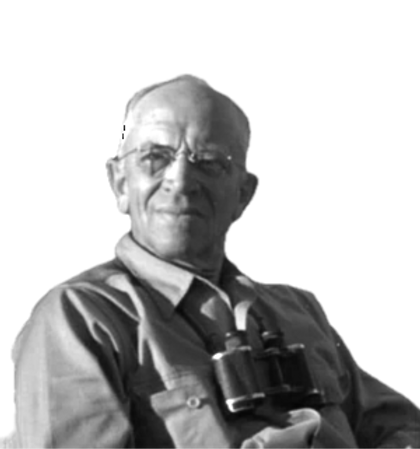
Aldo Leopold

In this essay, Leopold shares his personal experience and reflection on the role of wolves in the ecosystem. It is a short two page essay - so poetic that I am willing to even call it a poem.

The essay is an account that tries to imagine the world from the perspective of a mountain. It explores how the mountain would have perceived the world around it.

Then, Leopold talks about watching a dying deer after an attack from the wolves. He tries to make sense of it.

However, he also tries to make a case for what the mountain might have thought, and how the mountain’s perception is possibly better than his own.

The mountain, for Leopold, is an entity that thinks of a larger picture - because he says the following:

Yet behind these obvious and immediate hopes and fears there lies a deeper meaning, known only to the mountain itself. Only the mountain has lived long enough to listen objectively to the howl of a wolf.

(Leopold, 1949, p. 1)

As we can see in the above quote, the spirit of Leopold strives to transcend the human perspective and comprehend the environment. It goes beyond the understanding of human time scales, delving into geological time scales that span centuries and millennia.

Moreover, he takes this idea one step further, suggesting that we, as humans, have not contemplated as deeply as the mountain. This is why he asserts:

"[The human] has not learned to think like a mountain. Hence we have dustbowls, and rivers washing the future into the sea." (Leopold, 1949, p. 2)

Despite being ahead of its time and the amazing prose, the essay has one major limitation. The essay is an extremely short narrative of just two pages.

Therefore, for the environmental historians, this is a good inspiration, but it does not and can not provide a framework on how we can shape our research output, especially if it goes beyond a few pages.

Nonetheless, this remains as an amazing inspiration for any such project.

Stone: An Ecology of
the Inhuman (2015)

The book received the René Wellek Prize from the American Comparative Literature Association in 2017.

Jeffrey J Cohen

Jeffrey J Cohen. Academic Website

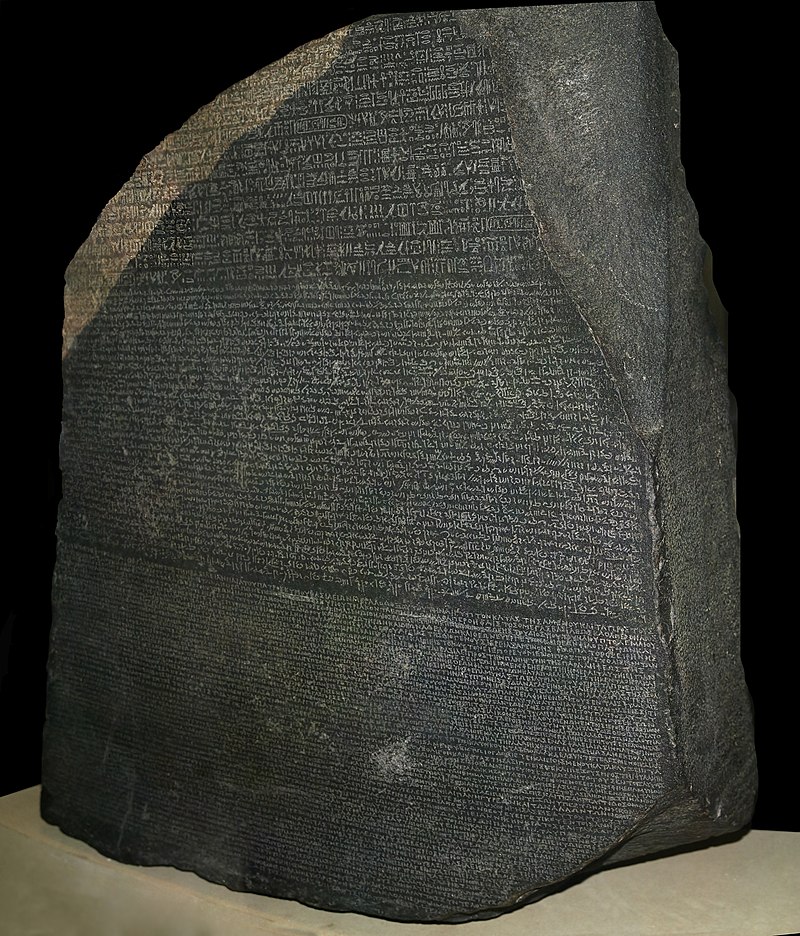
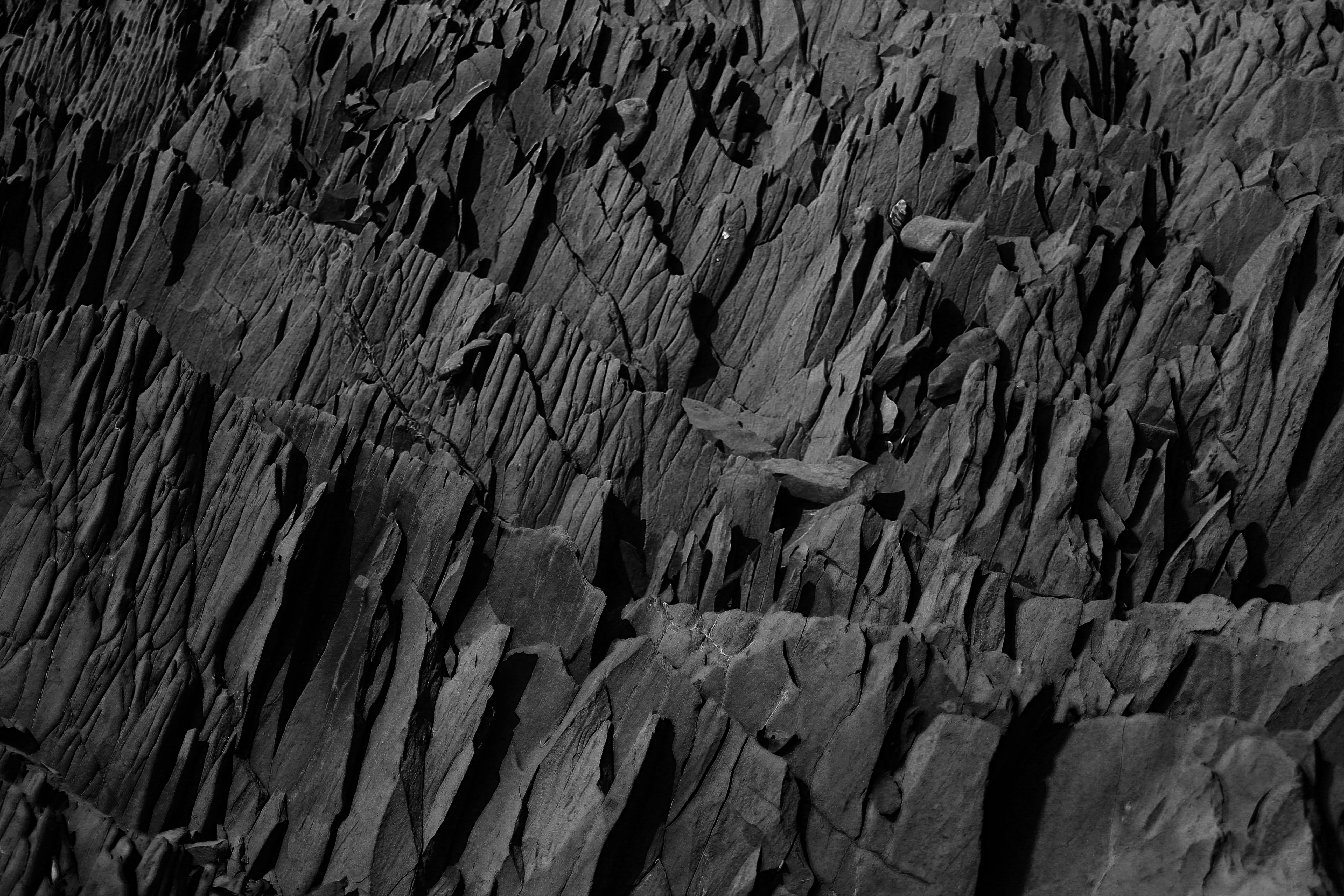
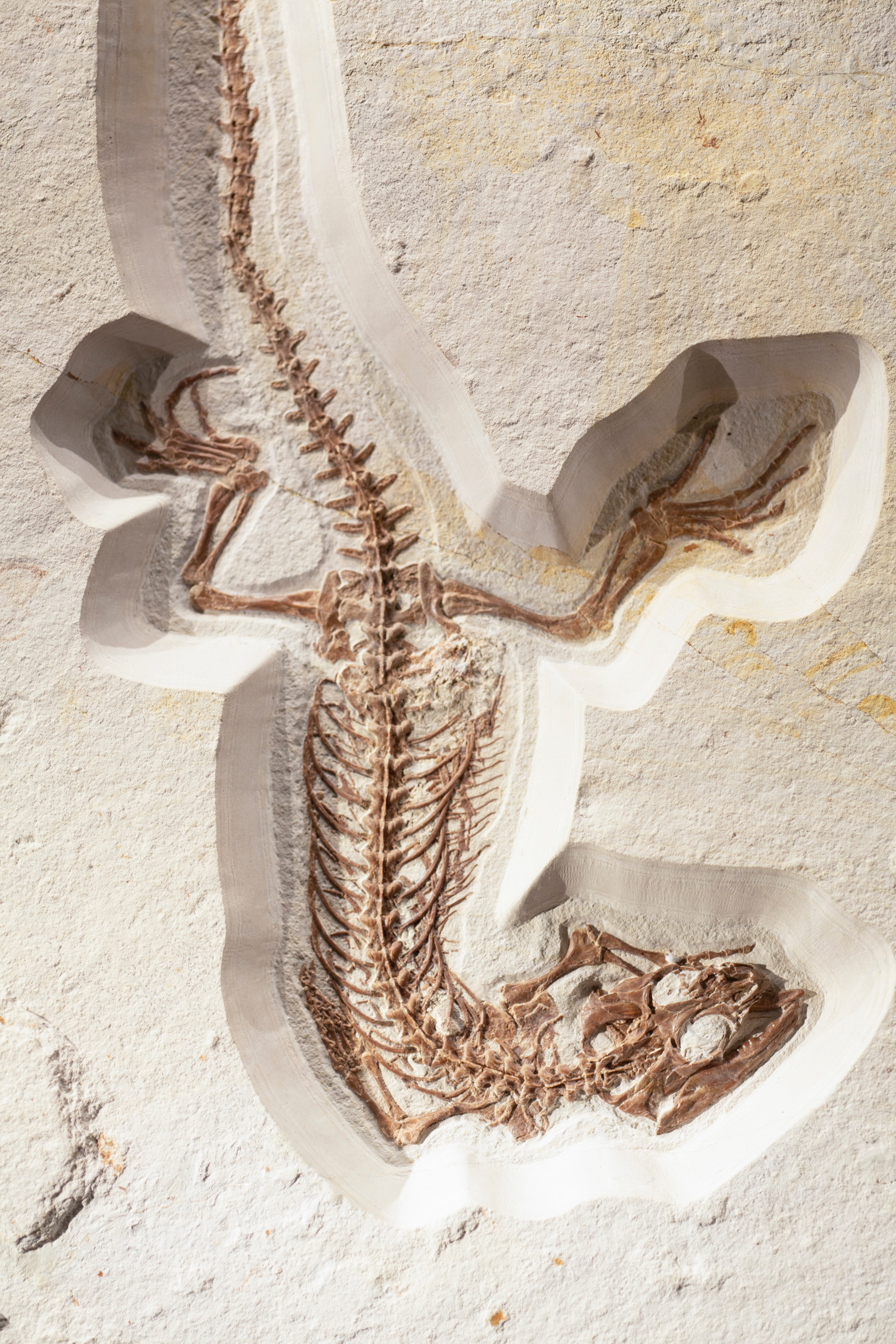
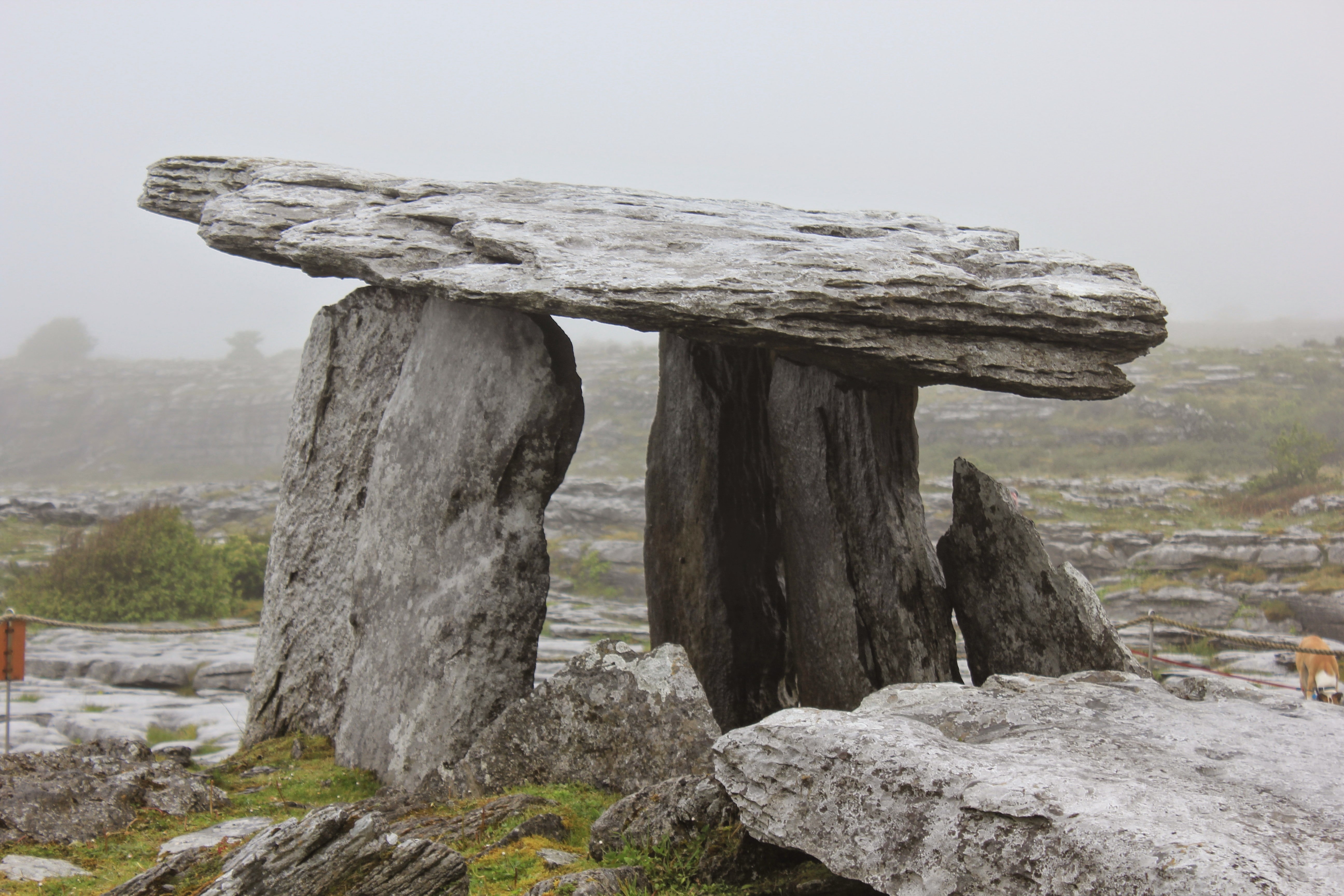
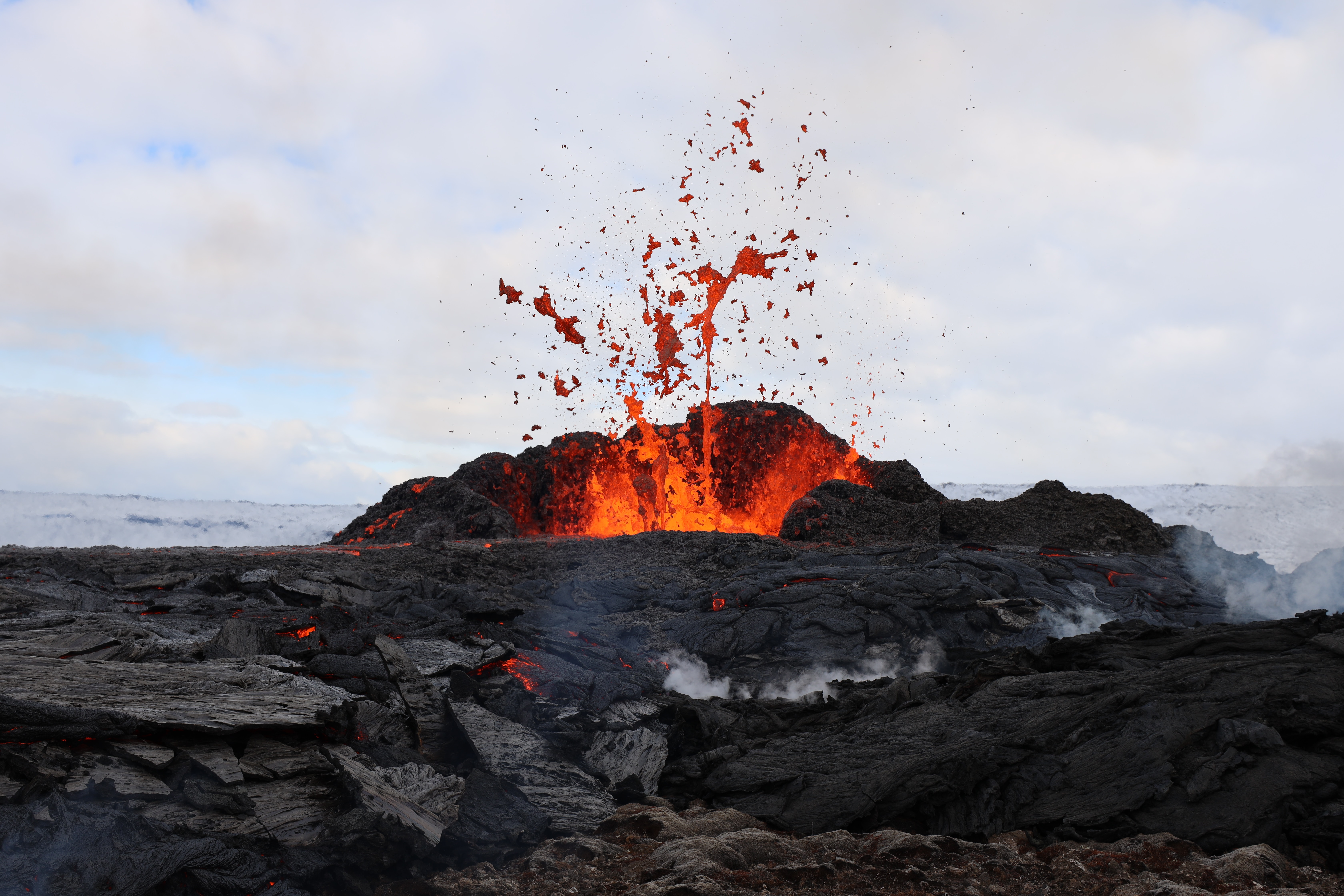
Cohen begins by discussing the variety of forms that stone takes, how it shapes our material world, and more importantly – how the stone forms our basis of understanding, often times through metaphors about the world.

He refers to the use of stone and lithic entities in the myths and stories that form and shape some of our major belief systems: religion and sciences. (Cohen, 2015, p. 5-6)

He also explicitly refers to works of Bruno Latour and Karen Barad, two influential new materialist thinkers that we have discussed earlier.

To illustrate his arguments, let’s explore some of the quotes from Cohen, and see how he has tried to move away from anthropocentric narratives.

Stone has agency, as one can see from the excerpts here:

“A rock supports, defeats, fosters, yields, impels, risks, resists.” (Cohen, 2015, p. 43)

[a rock stands for] “vast durations, slow movement, and inhuman scale.” (Cohen, 2015, p. 27)

“A rock discovered at the shoreline opens an adventure in deep time and inhuman forces: slow sedimentation of alluvium and volcanic ash, grinding tectonic shift, crushing mass and epochal compaction, infernal heat, relentless turbidity of the sea.” (Cohen, 2015, p. 4)

“Yet rock moves like any liquid, restless and ephemeral: sedimented, recycled, engulfed, pulverized, melted, metamorphized, eroded, rebirthed. We think stone persists only because it outlasts. We trust stone as archive and monument, but we may as well write on water.

The fossil record is scanty, its gaps enormous, its lacunae inscrutable.

Stone promises futurity but provides only a brief and fragmented recordation.

Particles will in the end remain.

We will be readable from atomic traces, not from the architectures we build, not from bodies or machines or the stories that we tell.

The music of the spheres is the whirl of these bits and specks, objects of the smallest scale. Boulders, cliffs, mountains, sea floors, bones, continents, plates, planets: stone’s destiny is the cosmic dust that once it was, carrying some new chemicals perhaps, betraying to someone’s instruments the telltale signs of organic life that needed stone to burgeon, dwell, and thrive but particles all the same, fragments nearing silence.”

(Cohen, 2015, p. 256)

From these quotes, we can see how the stone has vitality and agency in shaping the world. The above statements bear witness to that fact.

But stone also reminds us of the larger time scales, the ephemerality the human in the larger schema of things.

It is a humbling experience that reminds us of the limits of the anthropocentric superiority purported by our times.

Furthermore, it reminds us of the limitations of humans in shaping the world. We are not the only ones with the agency to change.

It even reminds us of the limits of our agency. If one thinks about the agency of the non-human world, where say a desert of Nevada is experiencing a ten-thousand year 'temporary' drought, and it might have a wetter future, Our conceptions of the soil, mountain and other non-humans as an inert background character in history falters down.

(Cohen, 2015, p. 110)

Many faces of stone

Cohen builds on that and suggests:

“Inhuman agency undermines our fantasies of sovereign relation to environment, a domination that renders nature “out there,” a resource for recreation, consumption, and exploitation.” (Cohen, 2015, p. 9)

As a result, he reshapes and questions the central role of the humans in the history, and the world in general.

However, such narratives are also not without any limits.
Cohen acknowledges that:

“Any speaking of the nonhuman is a translation, and therefore error prone, filled with guesswork, and inclined toward fantasy. Story is a parasitical entity that in its familiar forms clearly depends on humans, but story is also itself a living thing and does not necessarily depend upon language to be conveyed.” (Cohen, 2015, p. 36)

Therefore, one can see that a project to do a nonhuman narrative is destined to fail. But such narratives hold a certain value that can enlighten us the limits of centrality of humans in history.

Lion at sunset

So even if we can't do justice to the narratives of the lions, it is still better than having no narratives other than those of the hunters.

A note on future direction:

As discussed above, theories falling under the broad umbrella of 'new materialism' share some common themes:

  • Critique of Traditional Dualisms
  • Relational Ontology
  • Materials as active and vibrant
  • Interdisciplinarity

But, after exploring Aldo Leopold's classic Thinking Like a Mountain (1949) and Cohen's Stone: An Ecology of the Inhuman (2015), I have tried to give a peak into the possibilities of non-anthropocentric histories.

These are to serve as an inspiration for the new generation of environmental historians to explore and understand the past, with an understanding that transcends our speciesism.

It is a difficult task, but perhaps an important one for our current climate crisis to understand that it is not only about us.

Other works to look for inspiration:

Bibliography

Abram, David. Becoming Animal. Pantheon Books, 2010.

Actor-Network Theory in Plain English. Directed by Spreadlove, 2009. YouTube, https://www.youtube.com/watch?v=X2YYxS6D-mI.

Barad, Karen. Meeting the Universe Halfway: Quantum Physics and the Entanglement of Matter and Meaning. Duke University Press, 2007.

Bennett, Jane, et al. New Materialisms: Ontology, Agency, and Politics. Duke University Press, 2010.

---. Vibrant Matter: A Political Ecology of Things. Duke University Press, 2010.

Çetiner, Niğmet. “A Recent Trend in the Humanities: The New Materialisms as Philosophy and Theory.” Theory and Research in Social, Human and Administrative Sciences II, vol. 2, 2020, pp. 227–41.

Cohen, Jeffrey Jerome. Stone: An Ecology of the Inhuman. University of Minnesota Press, 2015.

Deleuze, Gilles, et al. A Thousand Plateaus: Capitalism and Schizophrenia. 12th ed., Univ Of Minnesota Press, 2007.

Dolphijn, Rick, and Iris Van Der Tuin. New Materialism: Interviews & Cartographies. Open Humanities Press, 2012.

Domanska, Ewa. “Beyond Anthropocentrism in Historical Studies.” Historein, vol. 10, May 2011, p. 118. DOI.org (Crossref), https://doi.org/10.12681/historein.11.

Fox, Nick J., and Pam Alldred. “New Materialism.” The SAGE Encyclopedia of Research Methods, 2019, pp. 1–16.

Grant, David M. “Review of Stone: An Ecology of the Inhuman.” Environmental History, vol. 22, no. 4, 2017, pp. 738–40.

Latour, Bruno. Reassembling the Social: An Introduction to Actor-Network-Theory. Oxford University Press, 2007.

Leopold, Aldo. A Sand County Almanac and Sketches Here and There. Oxford University Press, 1949.

Oppermann, Serpil. “New Materialism and the Nonhuman Story.” The Cambridge Companion to Environmental Humanities, Cambridge University Press, 2021, p. 258-72.

The Art of Fiction No. 139. Vol. Winter 1994, no. 133, 1994. www.theparisreview.org.
Acknowledgements

This website-essay is a project for HIST7544: Don't Be Afraid of Theory! (Fall 2023) under the guidance of Dr. Julian Bourg.

I am extremely grateful to my parents for their constant encouragement. I am thankful for the comments from my classmates - especially Joshua Rosen. This would not have been possible without the support of Sarthak Jaiswal, Dr. Prasannan Parthasarathi, Dr. Kapil Raj, Krithi Ramesh, Arnav Jalan, Adrish Dey and Debanuj Nayak.

Warmly,
Munir